Our story
Before Wales had a rugby team, before it had state secondary schools, it had Llandovery College - a school founded on a promise that the children of Wales deserved the best.
The beginning
Thomas Phillips, a London-born surgeon of Radnorshire stock who made his fortune with the East India Company, spent his last years giving that fortune away - becoming, in the words of the Dictionary of Welsh Biography, “the chief benefactor of Welsh education in the 19th century”.
His school opened in Llandovery on St David's Day, 1 March 1848, with fifteen boys. Phillips asked for a first-class classical education, taught in English, with one courtesy that was remarkable for its era: the language, literature and history of Wales were to be cultivated alongside it. That balance endures today - teaching through the medium of English, with the heritage of Wales honoured around it.
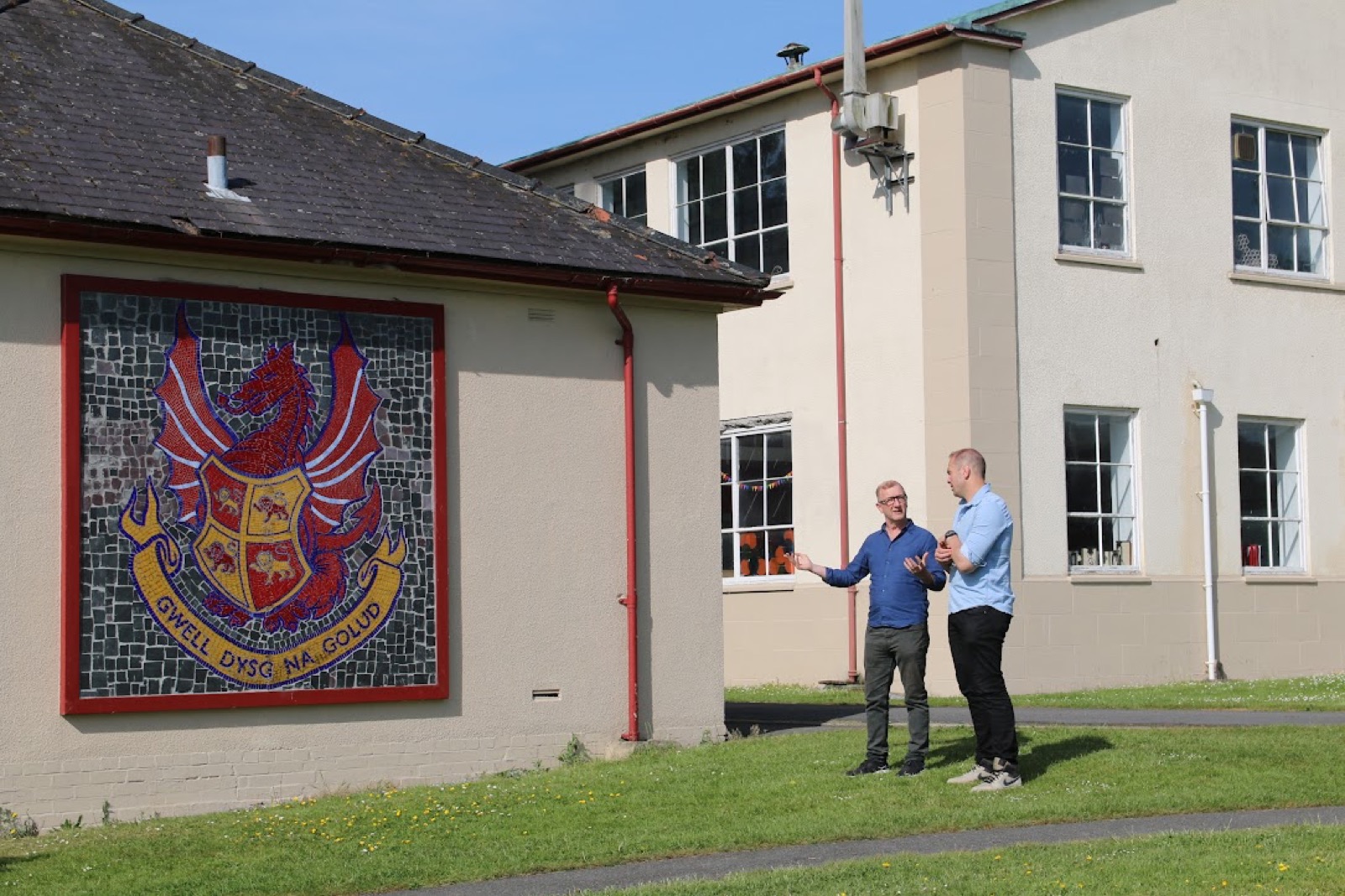
Phillips lived just long enough to see his school open. He died in 1851, having also endowed St David's College, Lampeter and given away libraries of books to communities across Wales - a fortune spent on a single conviction, the one on our crest: better learning than wealth.
Timeline
Fifteen boys, one Warden, and a founding deed asking for a first-class classical education, taught in English, with the language and history of Wales honoured alongside. Our first Warden, Archdeacon John Williams, had been the first Rector of Edinburgh Academy and a close friend of Sir Walter Scott - he read the burial service at Scott's graveside.
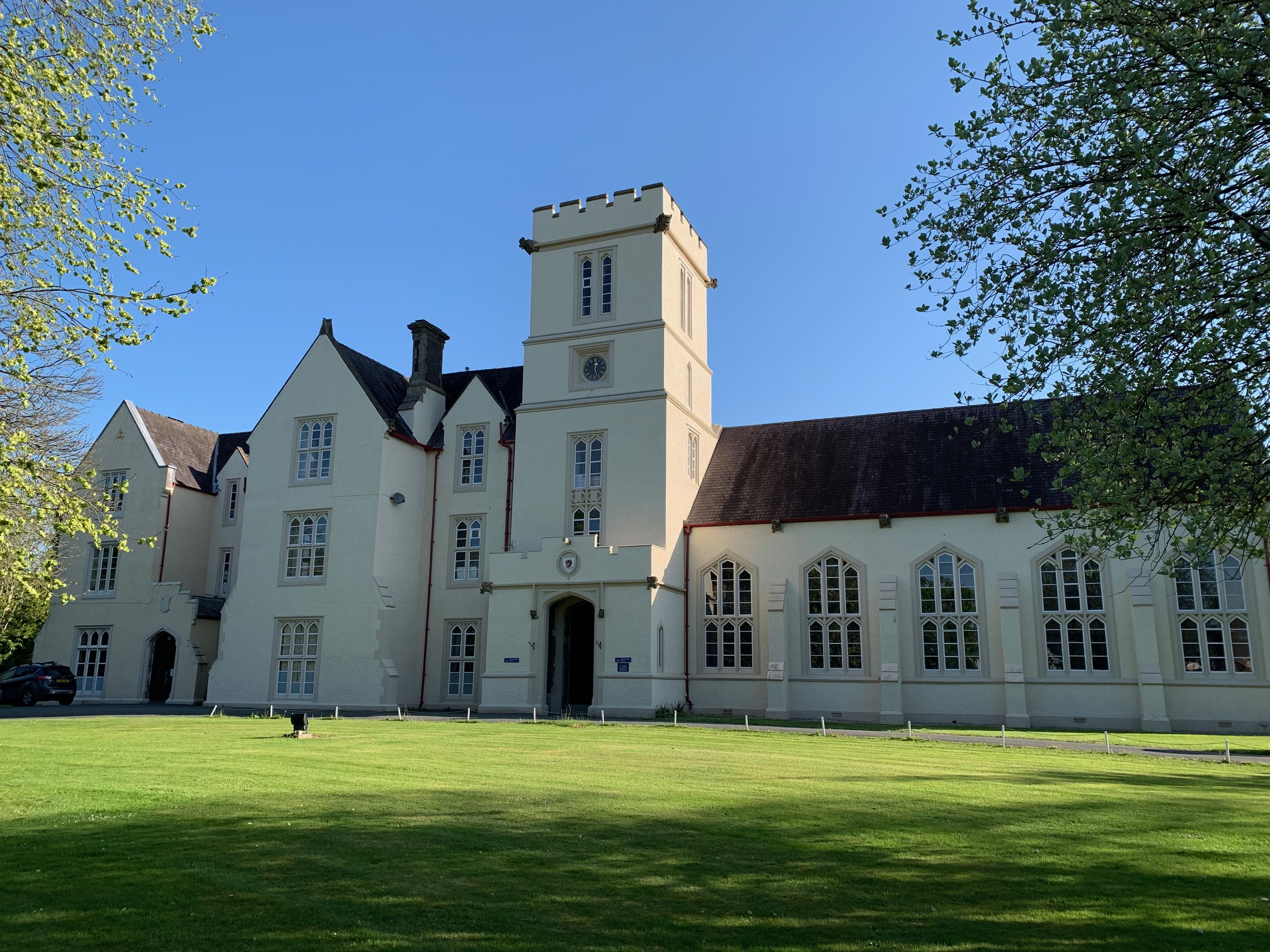
The foundation stone is laid by Connop Thirlwall, Bishop of St Davids, and the Collegiate Gothic buildings - today Grade II listed - take their place beneath the hills of the Tywi valley.
Pupils and masters of Llandovery College and St David's College, Lampeter meet at Caio in the first football match played in Wales under Rugby School rules. The Welsh Rugby Union now formally recognises Llandovery College as co-founder of rugby in Wales.
The first fixture against Christ College Brecon, at neutral Builth Wells - two years before the Welsh Rugby Union even existed, and believed to be the oldest schoolboy rugby match in England and Wales. The press dubbed it “Wales's Own Varsity Match”; Vivian Jenkins, who played in it before playing for Wales and the Lions, called it “fierce, frantic and wonderful”. Brecon are the bigger school; the scoreboard has never much cared. After 128 meetings it stands Llandovery 89, Brecon 29, with 10 draws. The legend of the Brecon Monkey, kidnapped from our first Warden, lives on in our entrance hall - guarded by the Boys' 1st XV captain each Brecon Week.
The College is a founder member of the Welsh Rugby Union at the Castle Hotel, Neath; two Llandoverians play in Wales's first international that same year.
So said Sir James Williams-Drummond. We took the compliment - and kept our own name.
A. G. Edwards - Old Llandoverian and former Warden - is enthroned as the first Archbishop of Wales. A generation later a second Old Llandoverian, David Lewis Prosser, holds the same office.
The future coach of the immortal 1971 British & Irish Lions teaches Welsh, rugby and cricket here for thirteen years, believing the language to be “the bedrock of national heritage”.
Llandovery becomes fully co-educational - today our girls win Welsh caps of their own, and our Residential Girls' Rugby Academy is one of a handful in the country.
One family from 3 to 18, on one campus - followed by our Nursery, welcoming children from age three.
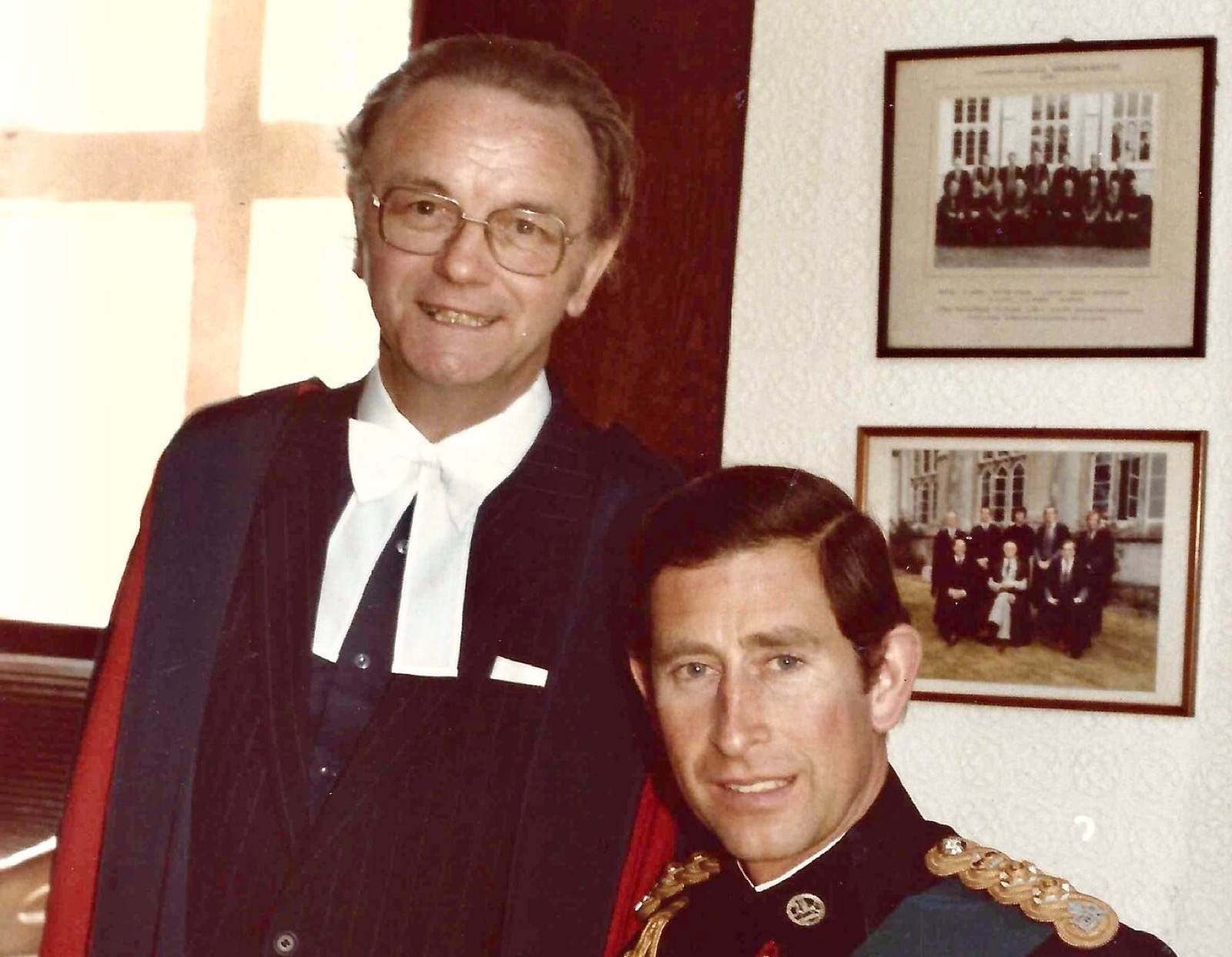
The Prince of Wales - our near neighbour at Llwynywermod - opens the first Confucius Classroom in Wales at the College.
In our 175th year, the College hosts the Urdd National Eisteddfod, Europe's largest youth festival, for the first time in its history: a week of poetry, music and dance, and some ninety thousand visitors on our grounds.
Years of the pressures closing independent schools across Britain - hundreds of them, several in Wales - bring Llandovery to a cliff-edge: open in September, or close. Before the story even breaks, the question is answered. Insiders step in with personal funds, staff volunteer pay cuts so parents won't be asked, parents give their summer to the grounds instead, and the College restructures onto a sound footing. Other schools' stories ended that summer. Ours turned a page. Read the story →
A non-selective, co-educational school of the Church in Wales, teaching through the medium of English while keeping the Welsh language and its culture alive - still doing what the founding deed asked: discovering the individual in every child of Wales, and now, of the world.
From the archives
For the record
Fifty-plus internationals. Five hundred-plus Welsh caps. Co-founders of the game in Wales, of the WRU, and of the oldest schoolboy fixture in England and Wales - “Wales's Own Varsity Match” against Christ College Brecon, which after 128 meetings we lead by 89 wins to 29. When our Boys' 1st XV plays, S4C broadcasts it live to the nation - and our Girls' 1st XV has twice reached the final of the WRU Welsh Schools & Colleges Women's National Conference.
We hold that heritage with pride - and in proportion. Rugby here is what all sport here is: a way of forming character, togetherness and grace under pressure. Most of our children will never play for Wales. Every one of them will learn what a team owes its weakest member and what a captain owes everyone.
The same school that gave Wales its fly-halves gave it an archbishop, a bard, Freud's biographer and a jazz legend. That is not a rugby school. That is a school.
Old Llandoverians
Two Archbishops of Wales - including the very first, in 1920.
Pioneer of psychoanalysis in Britain; Freud's colleague and official biographer.
An Eisteddfod composer and bard; and a jazz pianist who lit up New York.
From Ealing Studios to Pobol y Cwm to the West End stage.
Parliamentarian and historian; and the UK's voice at the International Labour Organization.
A Cambridge biochemist and a leading archaeologist of the Aegean Bronze Age.
Among the fifty-plus who wore the three feathers, from the men who beat the 1935 All Blacks to the most-capped player in the history of the game.
Wales international and hooker - proof the tradition belongs to our daughters too.
Every name above arrived as an unknown child. That is rather the point.
The history, in brief
The College opened on St David's Day, 1 March 1848, founded by Thomas Phillips, a London-born surgeon of Radnorshire stock who made his fortune with the East India Company and then gave it away to Welsh education. The Dictionary of Welsh Biography calls him the chief benefactor of Welsh education in the 19th century.
The College was founded in 1848, which makes it 178 years old in 2026.
The phrase dates to 1902 and reflects the College's standing as one of Wales's foremost schools. Llandovery takes the comparison lightly and likes to say that Eton should aspire to be the Llandovery of England.
Its pupils and masters played in the first rugby match ever held in Wales, in 1866, and the Welsh Rugby Union formally recognises Llandovery College as a co-founder of the game in Wales. More than fifty Old Llandoverians have won over five hundred caps for Wales, more than any other Welsh school. Rugby is honoured as one chapter of the College's story rather than its whole identity.
They include A. G. Edwards, the first Archbishop of Wales; Ernest Jones, the psychoanalyst and biographer of Sigmund Freud; the composer David Vaughan Thomas; the actor Mervyn Johns; and rugby internationals from Cliff Jones and Vivian Jenkins to Alun Wyn Jones, the most-capped player in the history of the game, and George North.
The motto is 'Gwell dysg na golud', which means 'Better learning than wealth'. It has been the College's motto since its founding in 1848 and reflects the conviction of its founder, Thomas Phillips.
Yes. It is a school of the Church in Wales, and a registered charity (number 1149946) whose objects include advancing education and the Welsh language, heritage, culture and the arts on the principles of the Church in Wales.
The College teaches through the medium of English, while keeping the Welsh language and its traditions, including the Eisteddfod, the Urdd, the House names and the motto, alive alongside. It is not a Welsh-medium school.
The annual match against Christ College Brecon, first played in 1879, is believed to be the oldest schoolboy rugby fixture in England and Wales, and is sometimes called Wales's Own Varsity Match. After the 128th meeting in October 2025, the series stood at 89 wins to Llandovery, 29 to Christ College Brecon, with 10 drawn.
“Gwell dysg na golud.”
Better learning than wealth · Thomas Phillips's motto, 1848
History is lovely. Children are better. Come and meet the ones writing chapter 179.